A clock is round because the day comes back. A calendar is a grid because somebody counted the month. Neither shape is required, we just got used to them. I wanted to see what happens when they trade places, so I built eight live sketches that draw the day like a calendar and the year like a dial. The only test was whether you could still read the time off each one.
What if we tracked a day the way we track a year, and a year the way we track a day? That was the whole brief. Each sketch had to change the shape of time without losing the time, using basic shapes and Neue Haas Grotesk. There is one accent color, switched off by default.
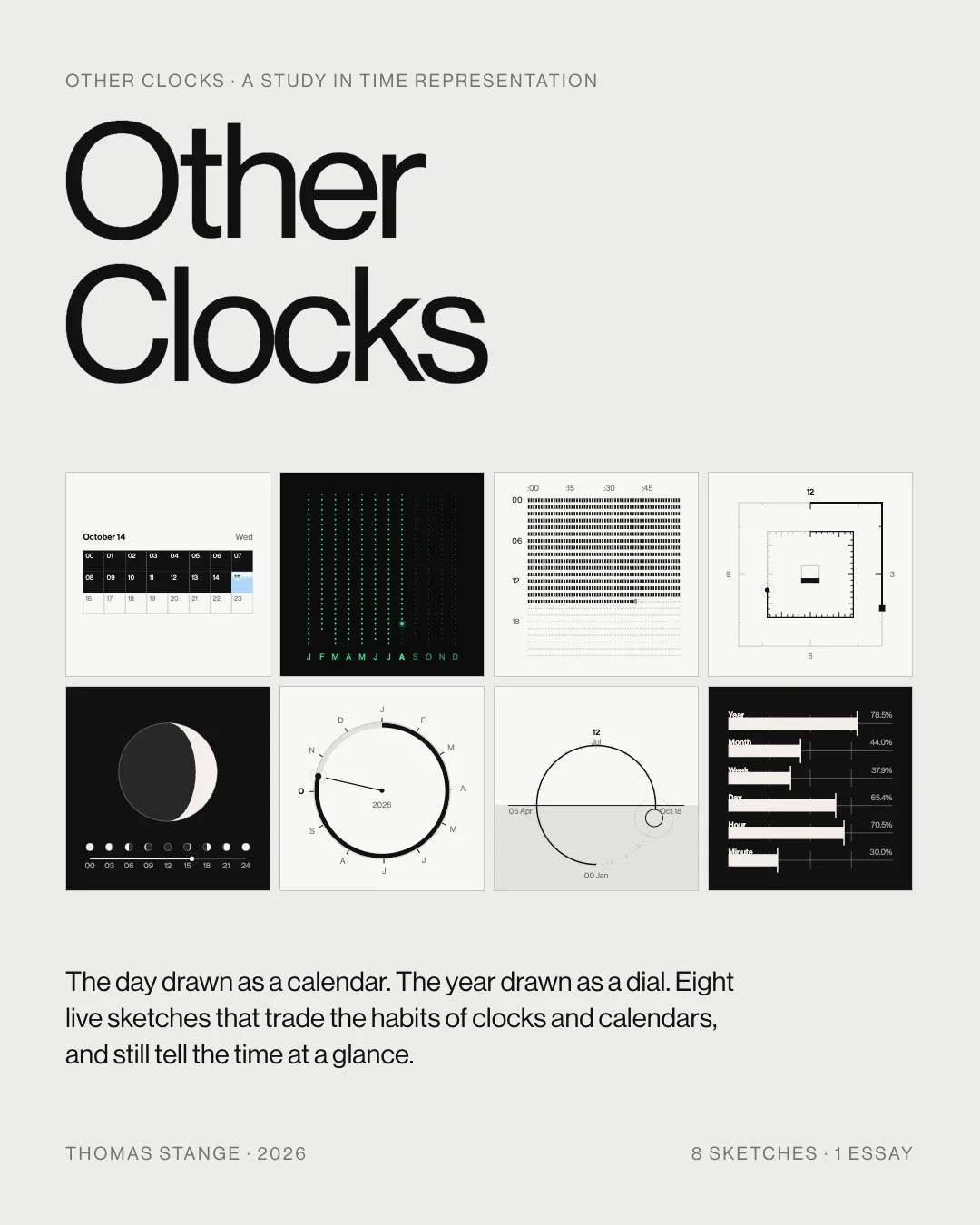
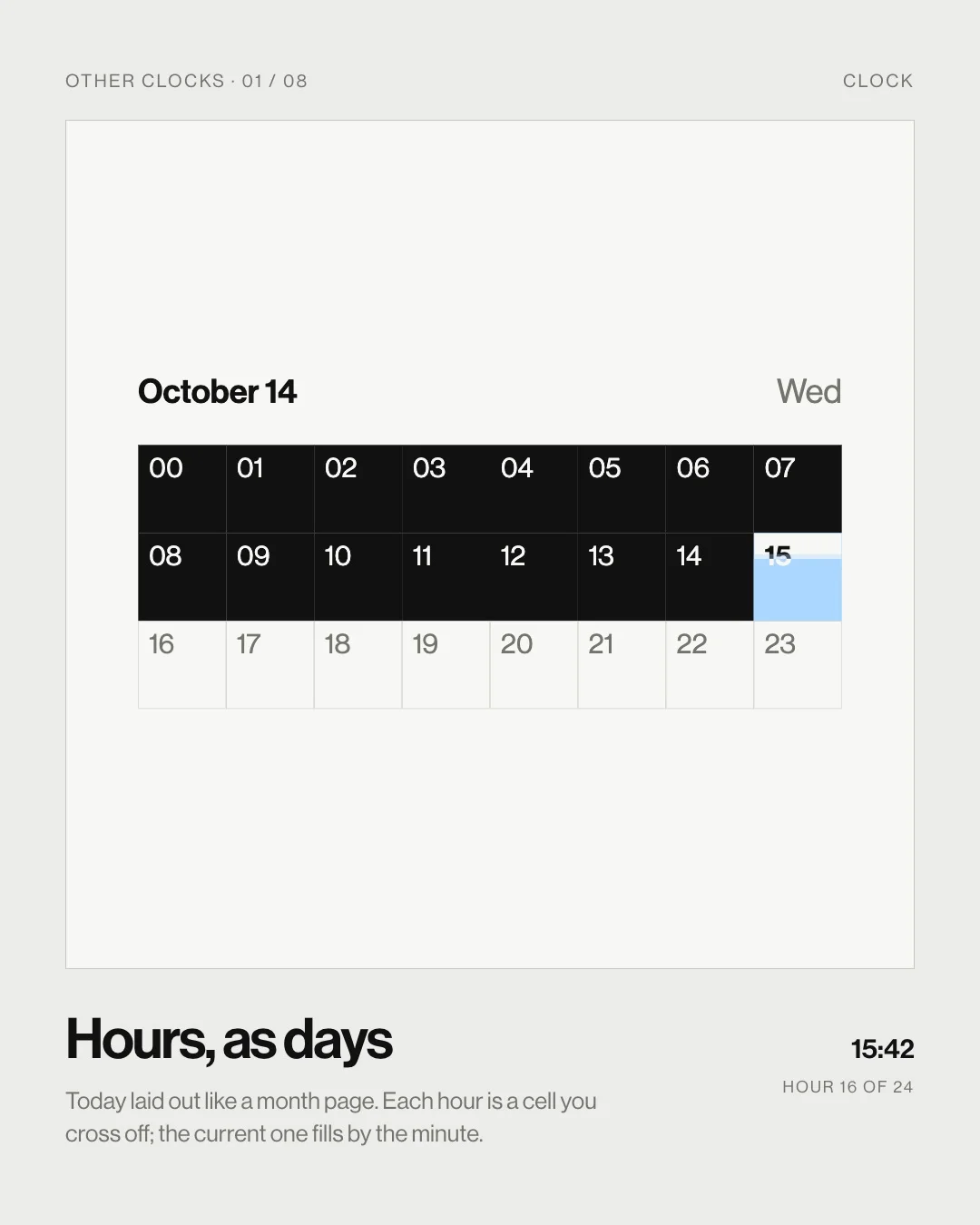
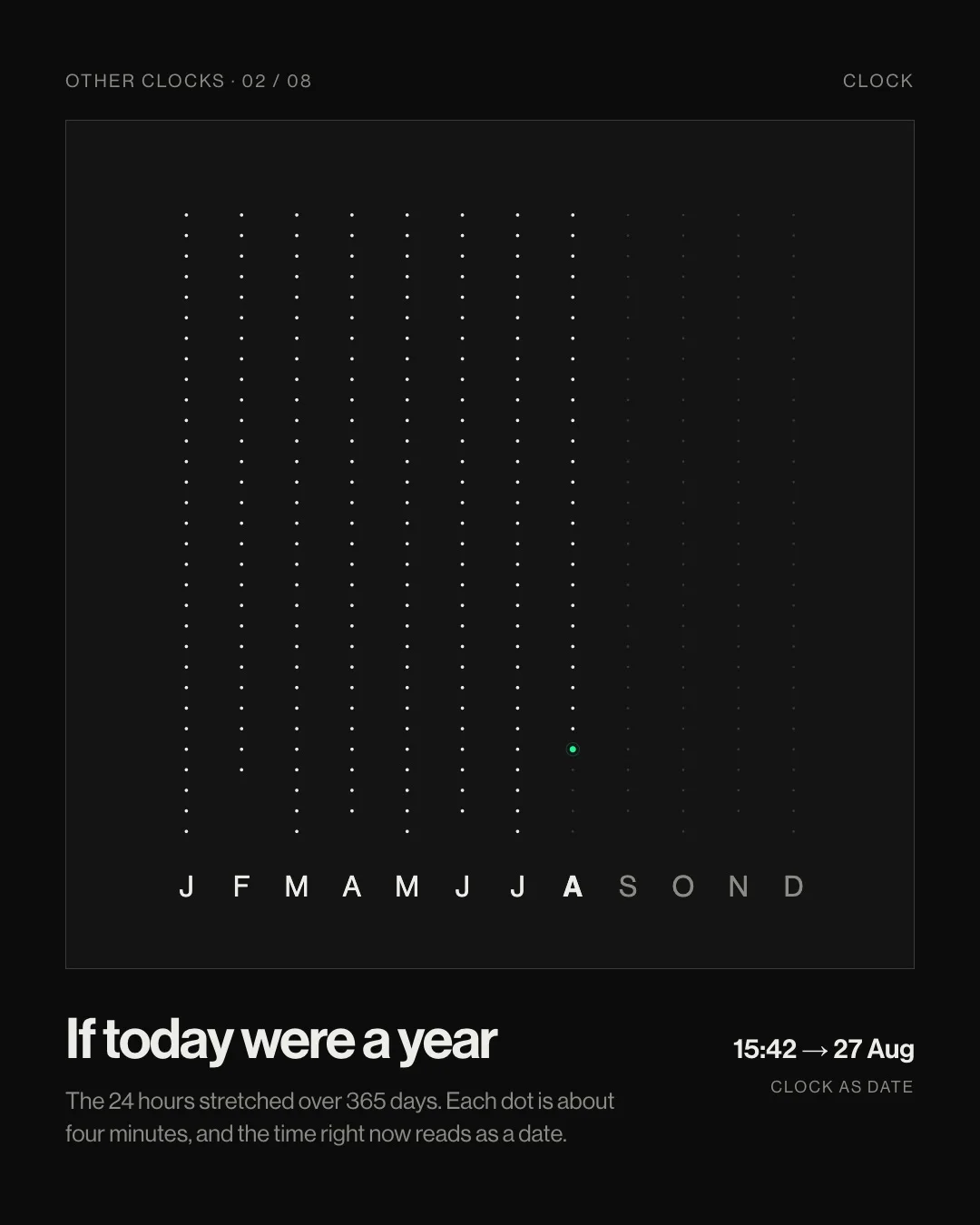
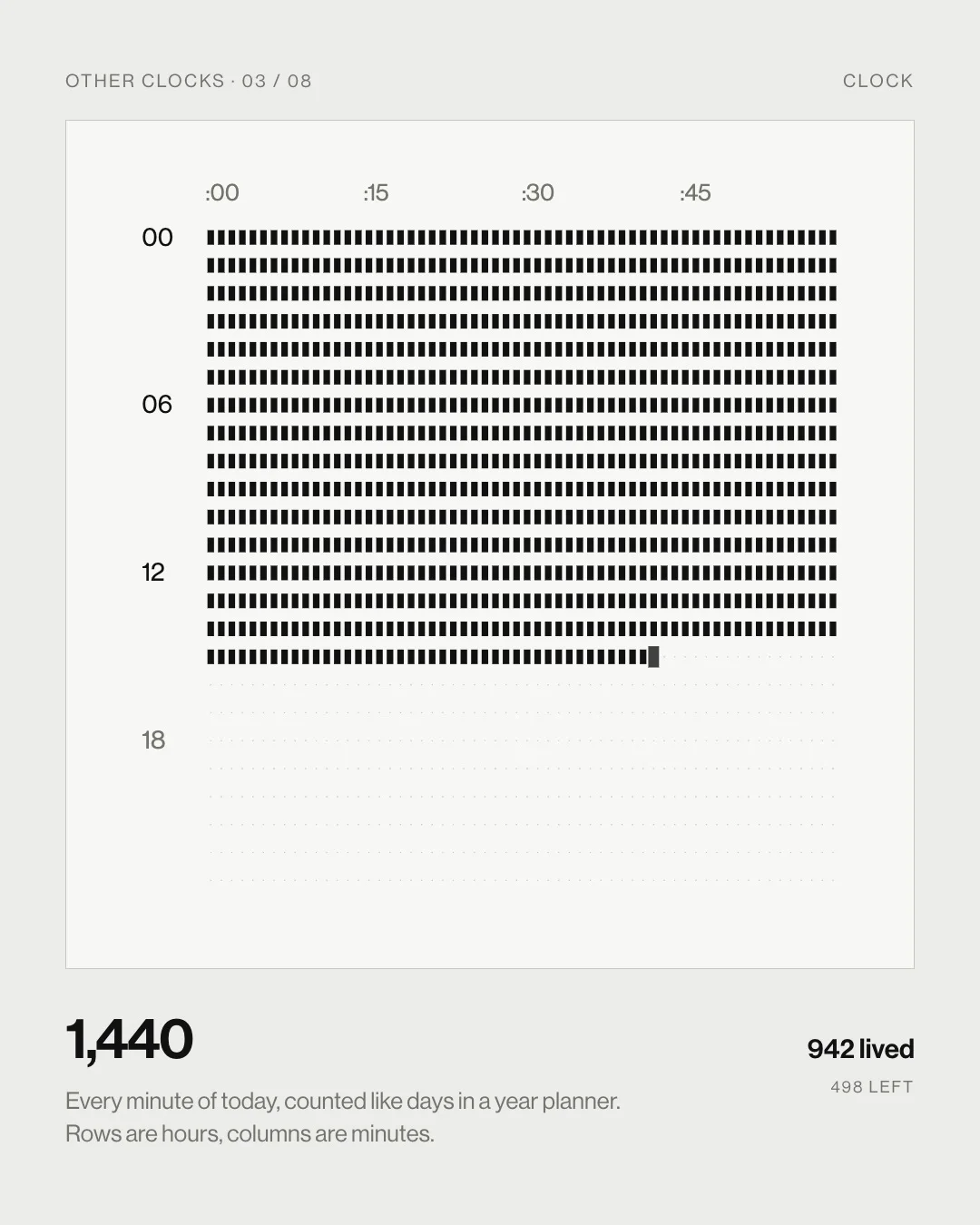
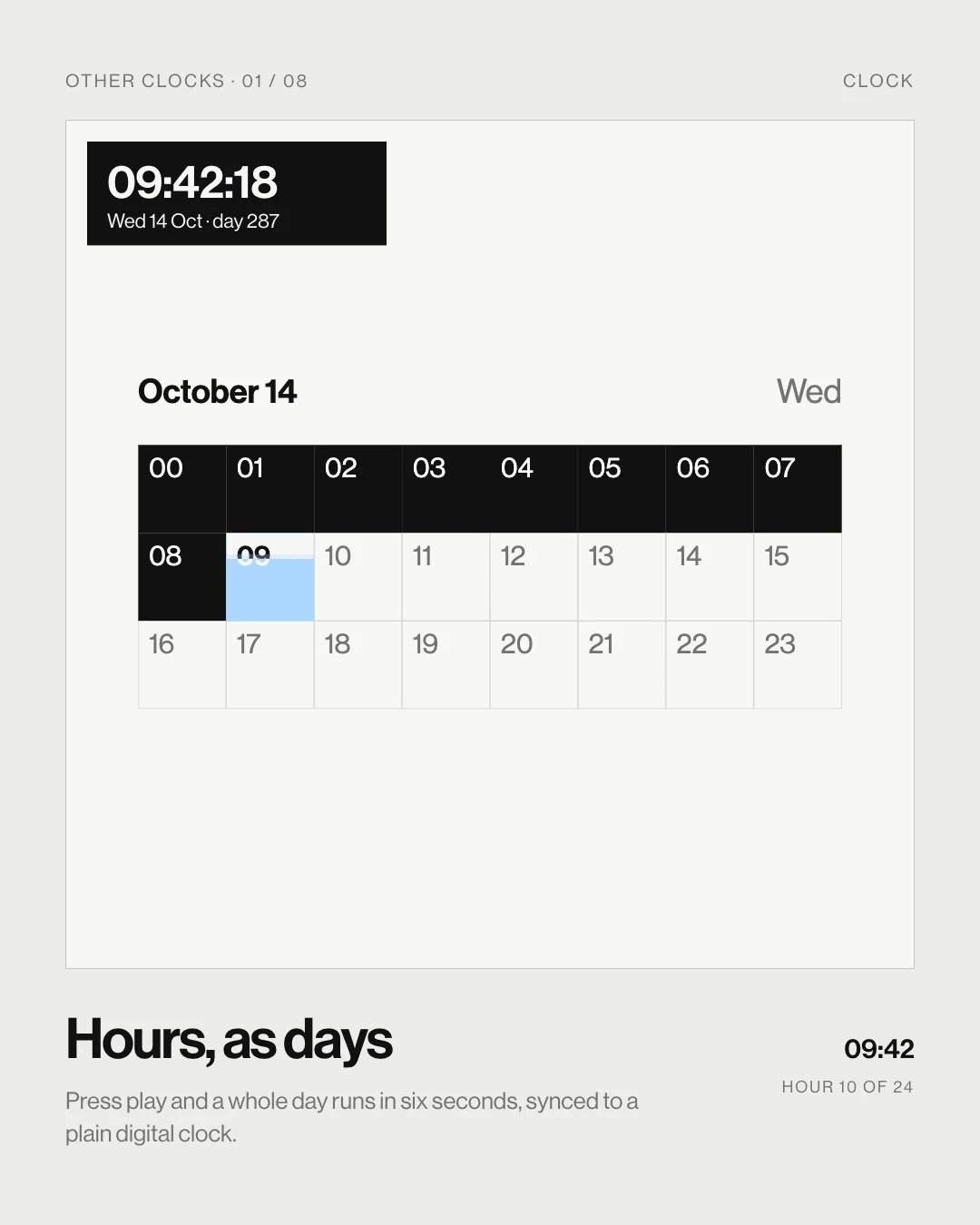
Five of them are clocks that count the way a calendar does. The hours are cells you cross off like days on a month page. Today is spread over 365 dots, so 2pm reads as a date in early August. A year planner holds all 1,440 minutes, a row per hour. One hand runs the edge of a square instead of a circle, so equal time covers equal distance. The last shows the day as a lunar month, full at noon.
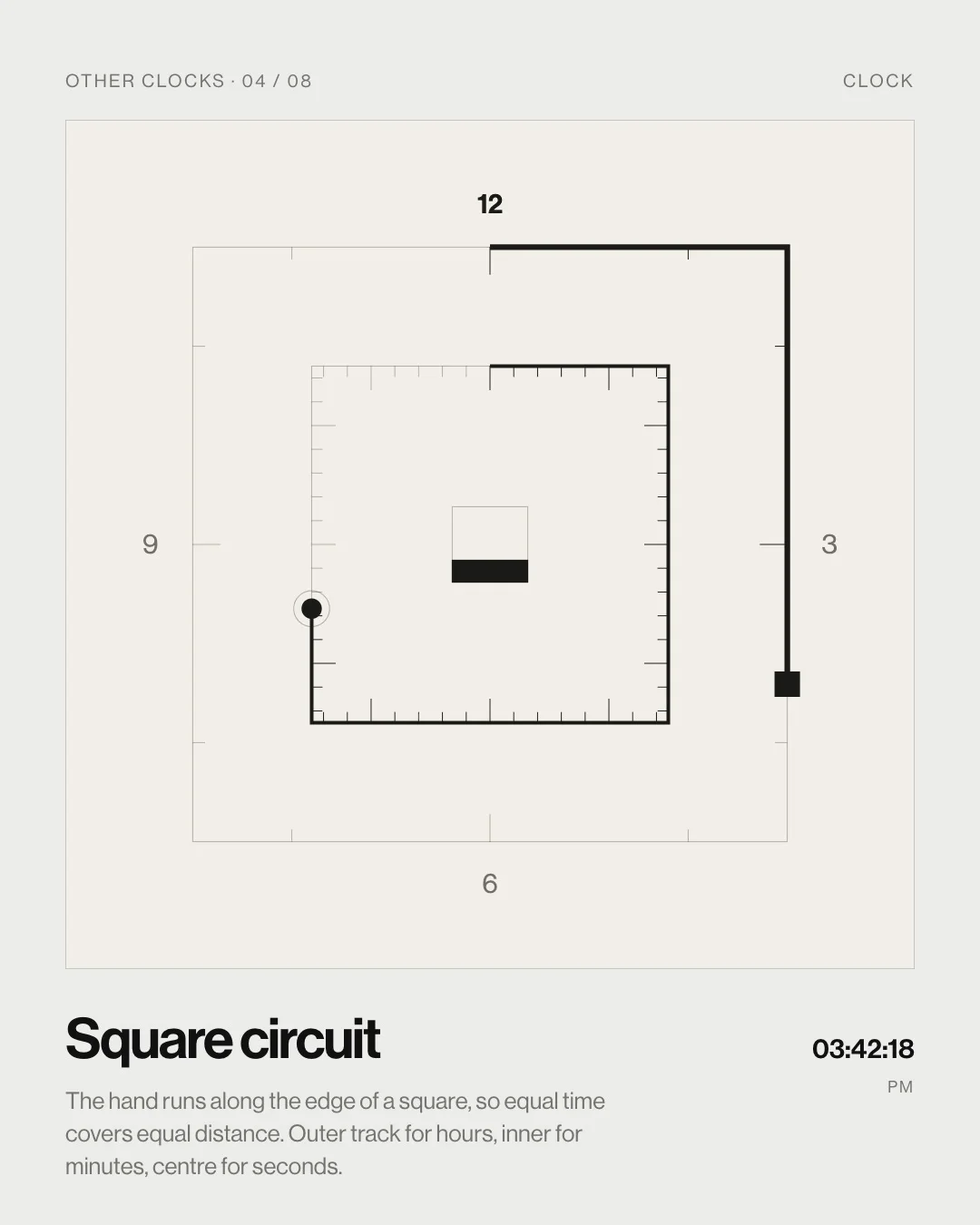
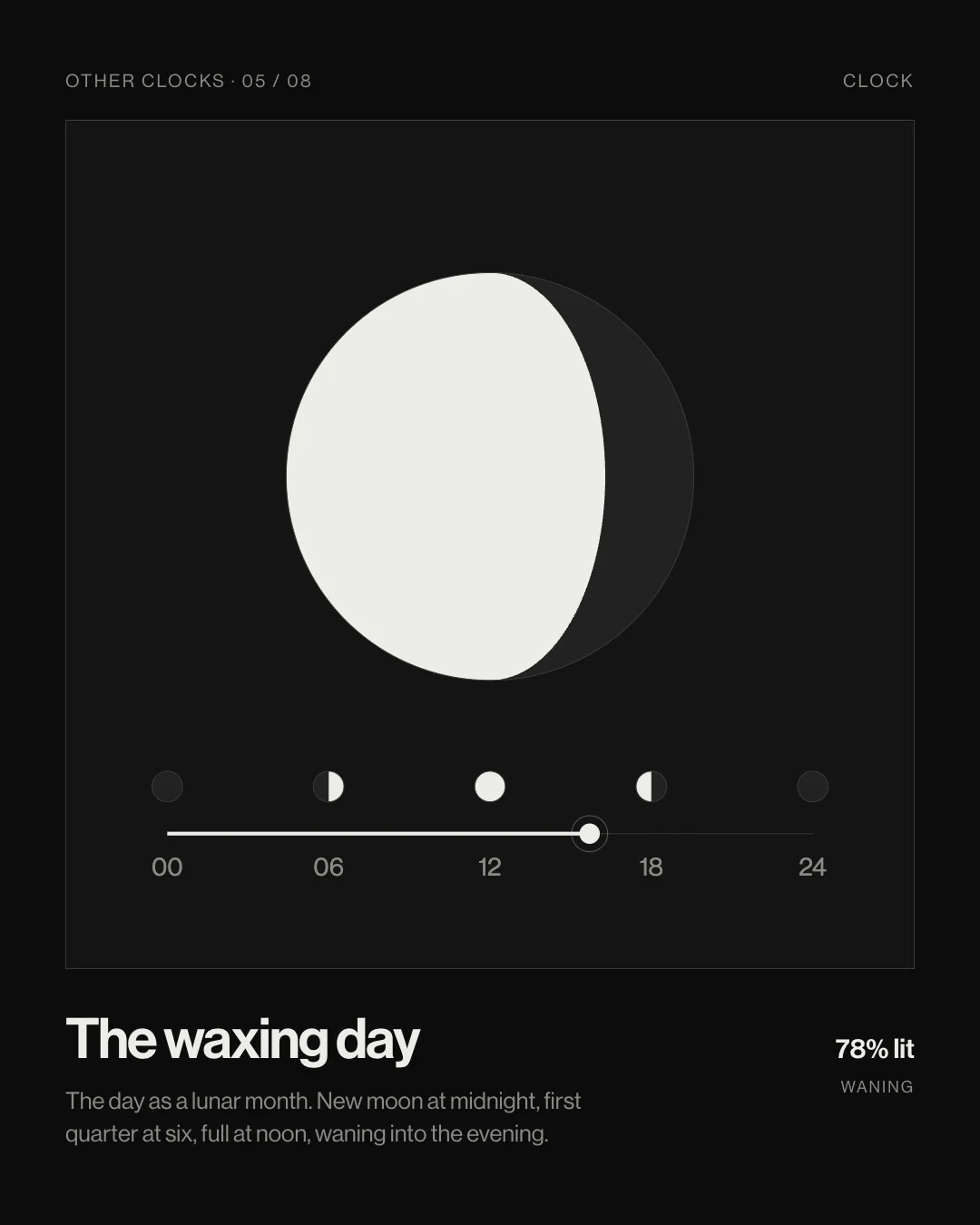
The other three are calendars that behave like clocks. One puts the whole year on a dial, one lap, with a solid band for the days already gone. One treats the year as a single long day, so the sun comes up in April and sets in October. The third stacks year, month, week, day, hour and minute as bars on the same ruler, each showing how much of it is used up so far.
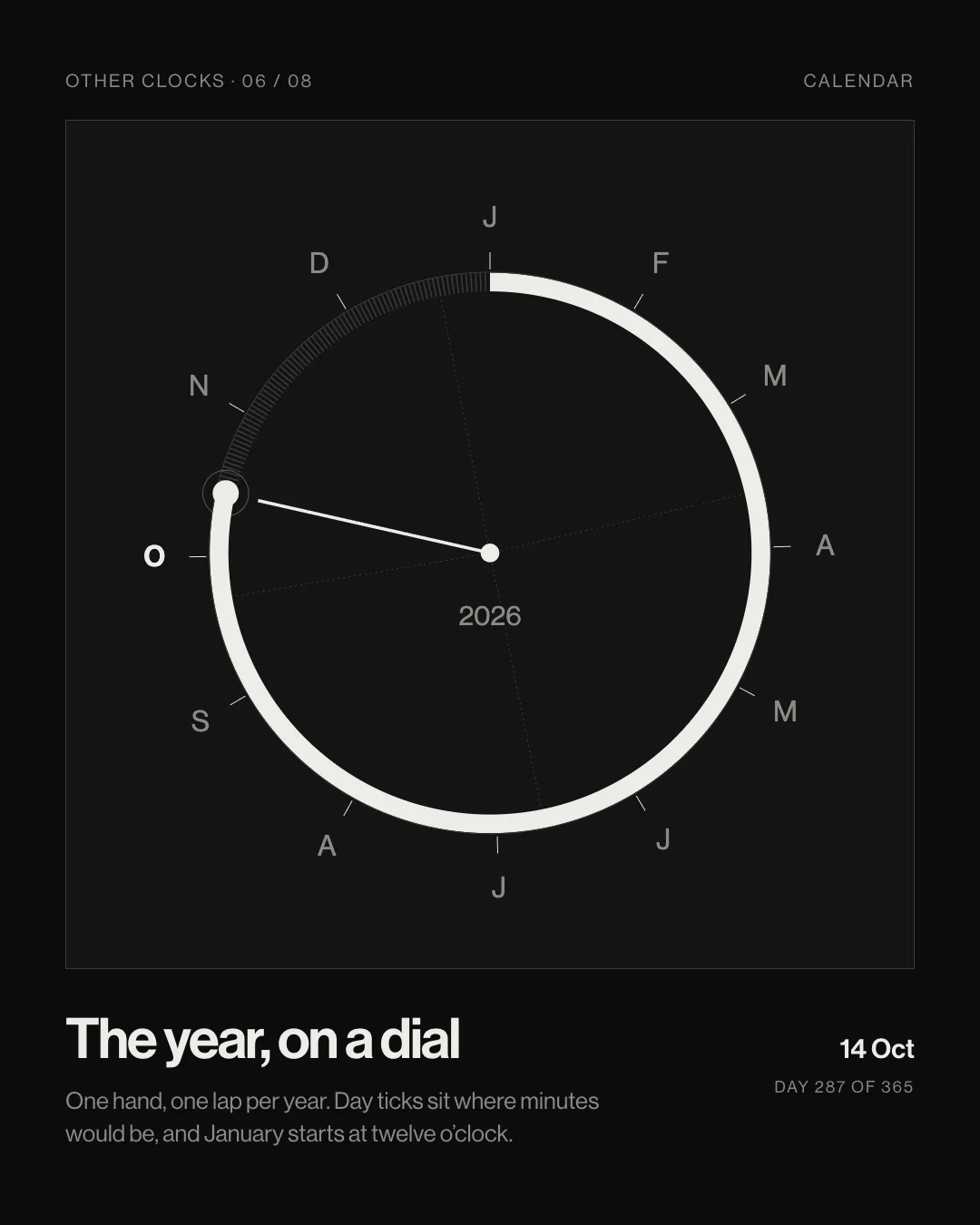
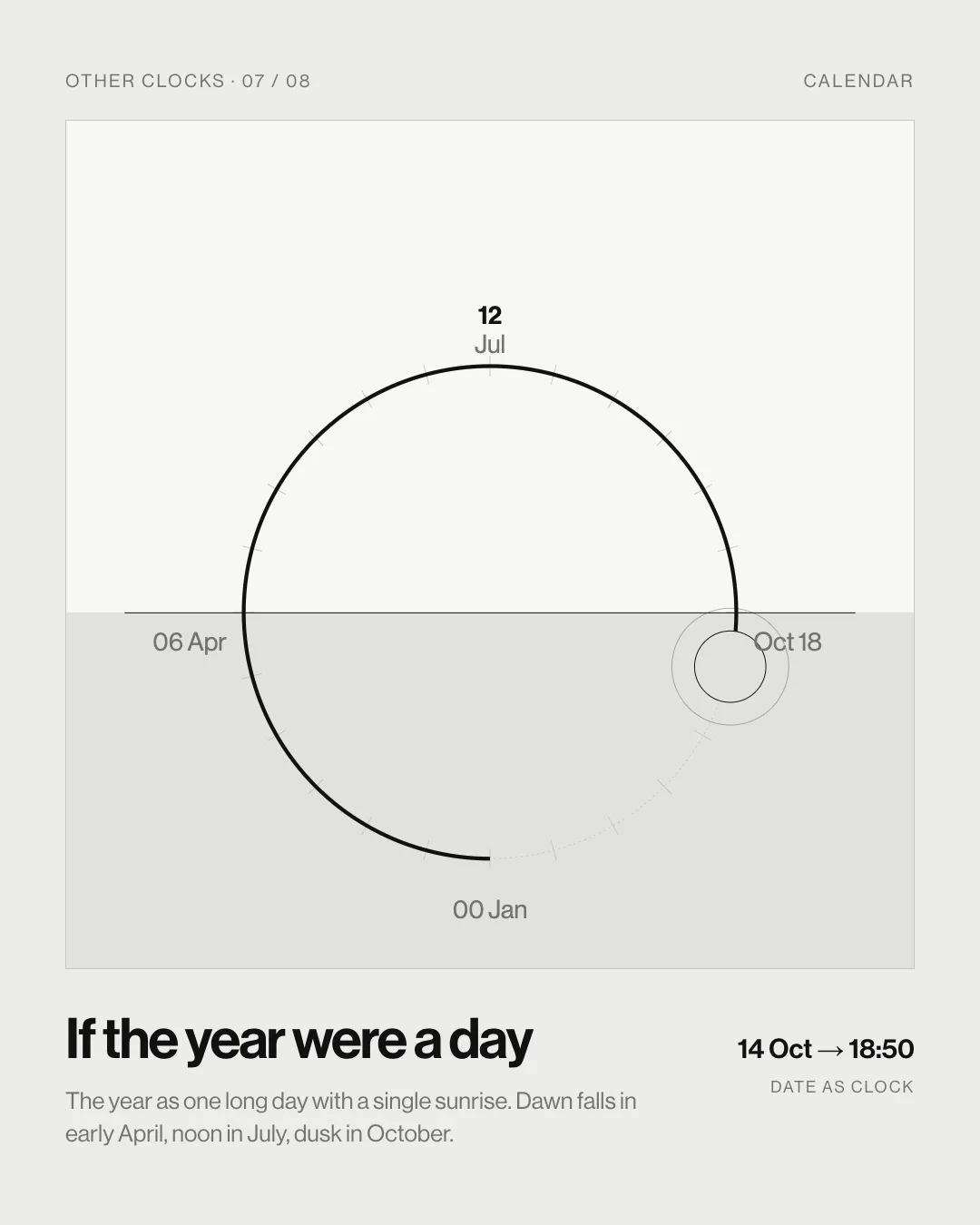
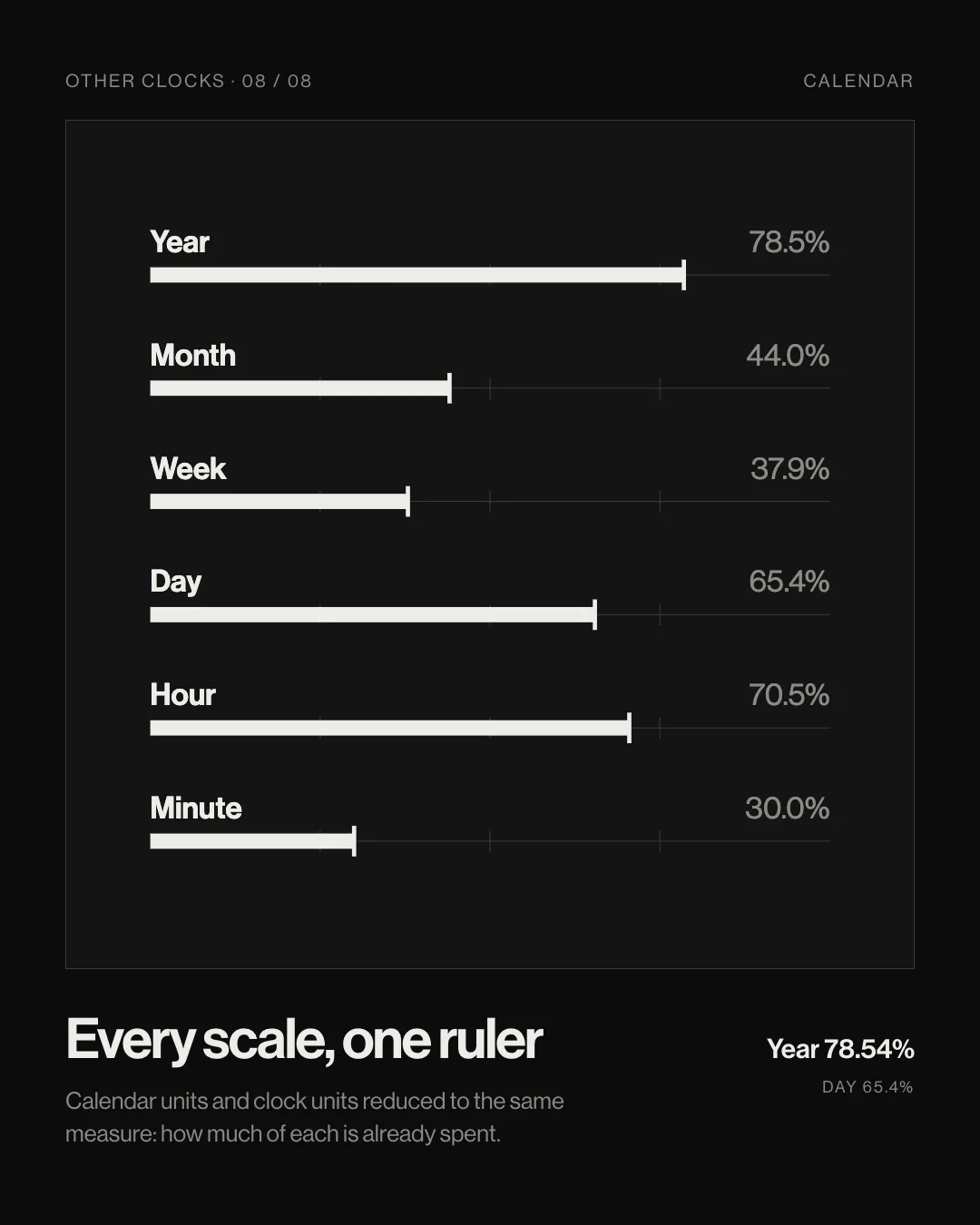
Press Play and each plate runs its whole cycle in a few seconds, a day for the clocks and a year for the calendars. A plain digital clock runs in sync beside it, because without one you can't tell whether the motion is right. Customize opens any sketch with a DialKit panel, a bit over thirty controls, and a short walkthrough on how to read that particular one.
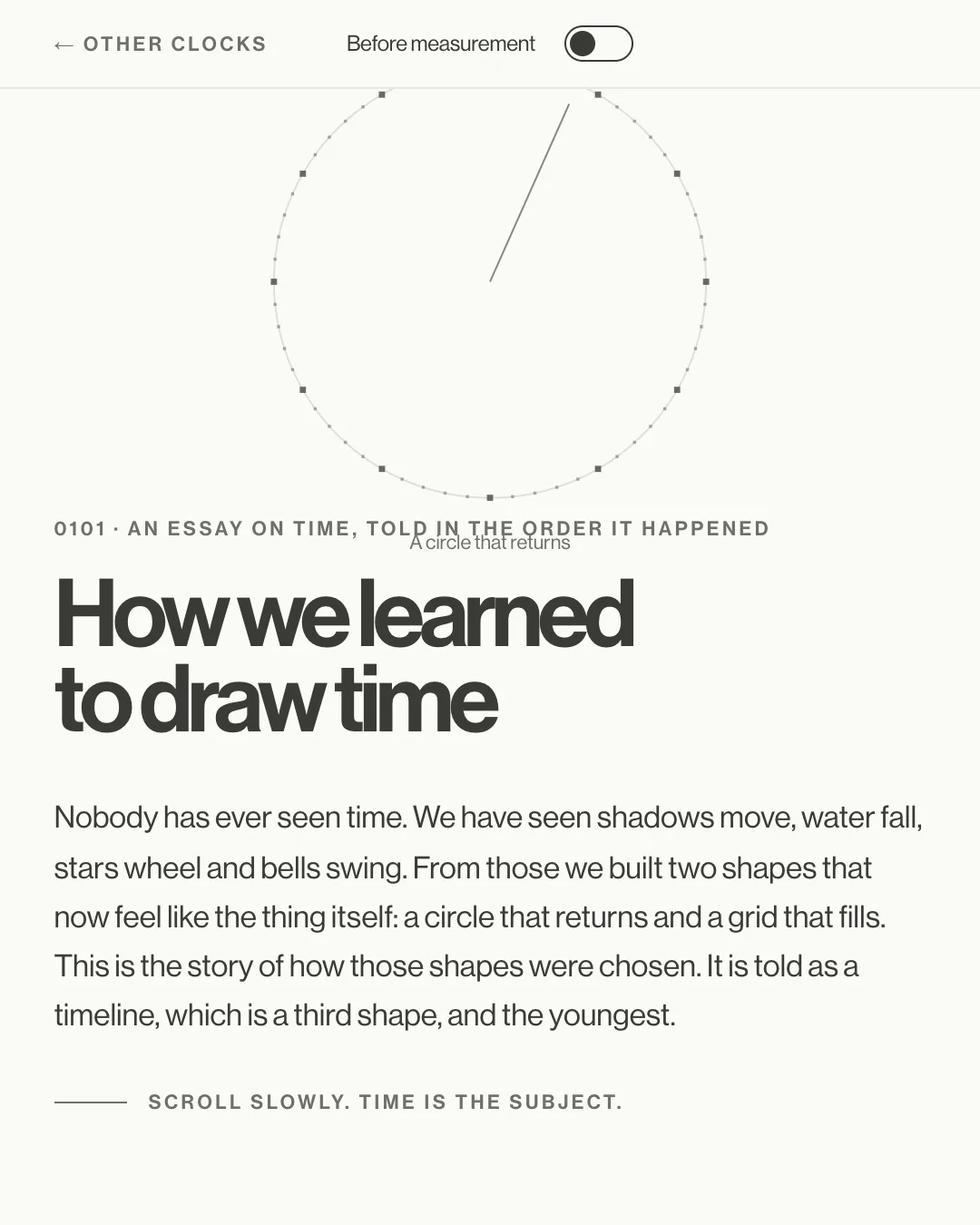
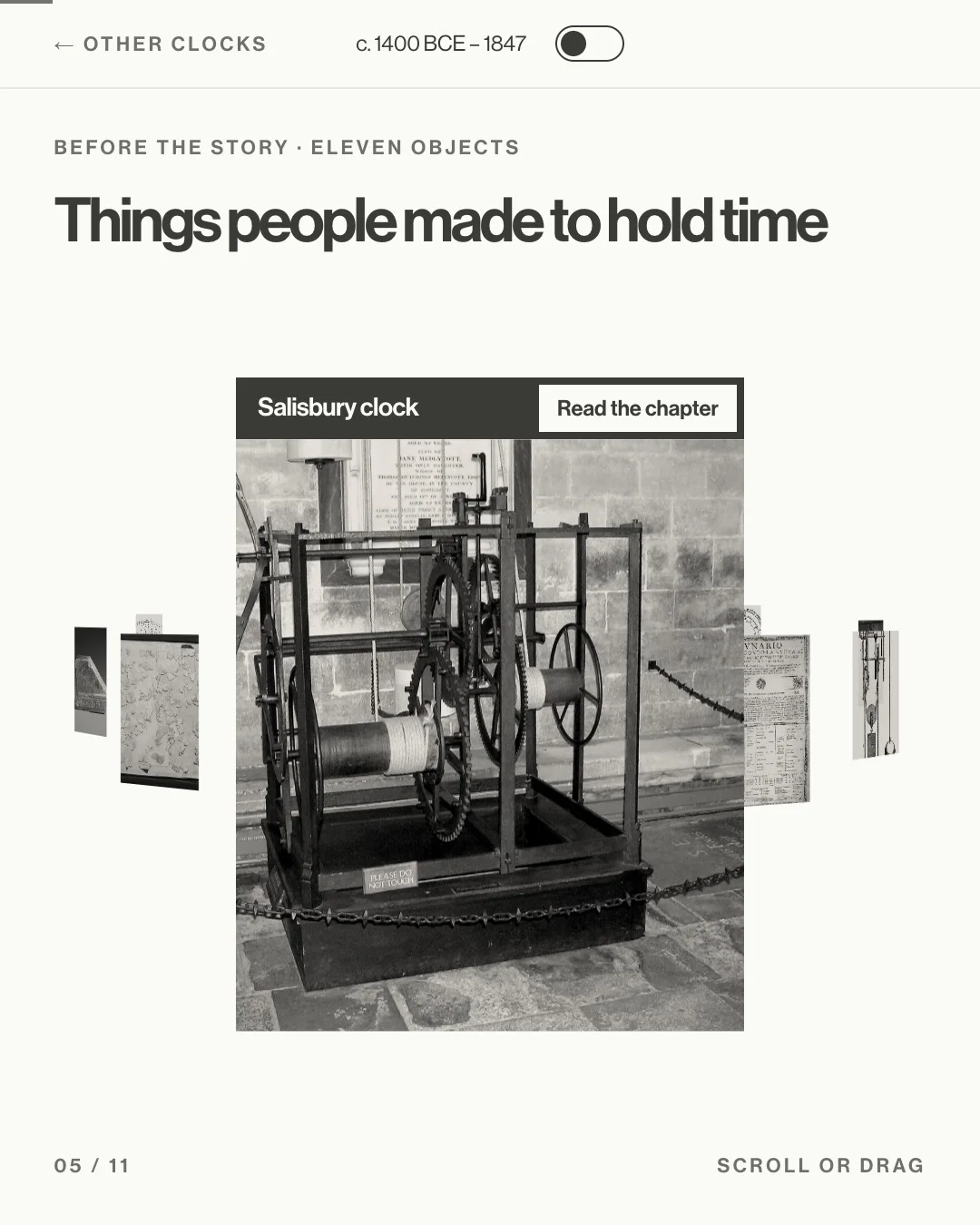
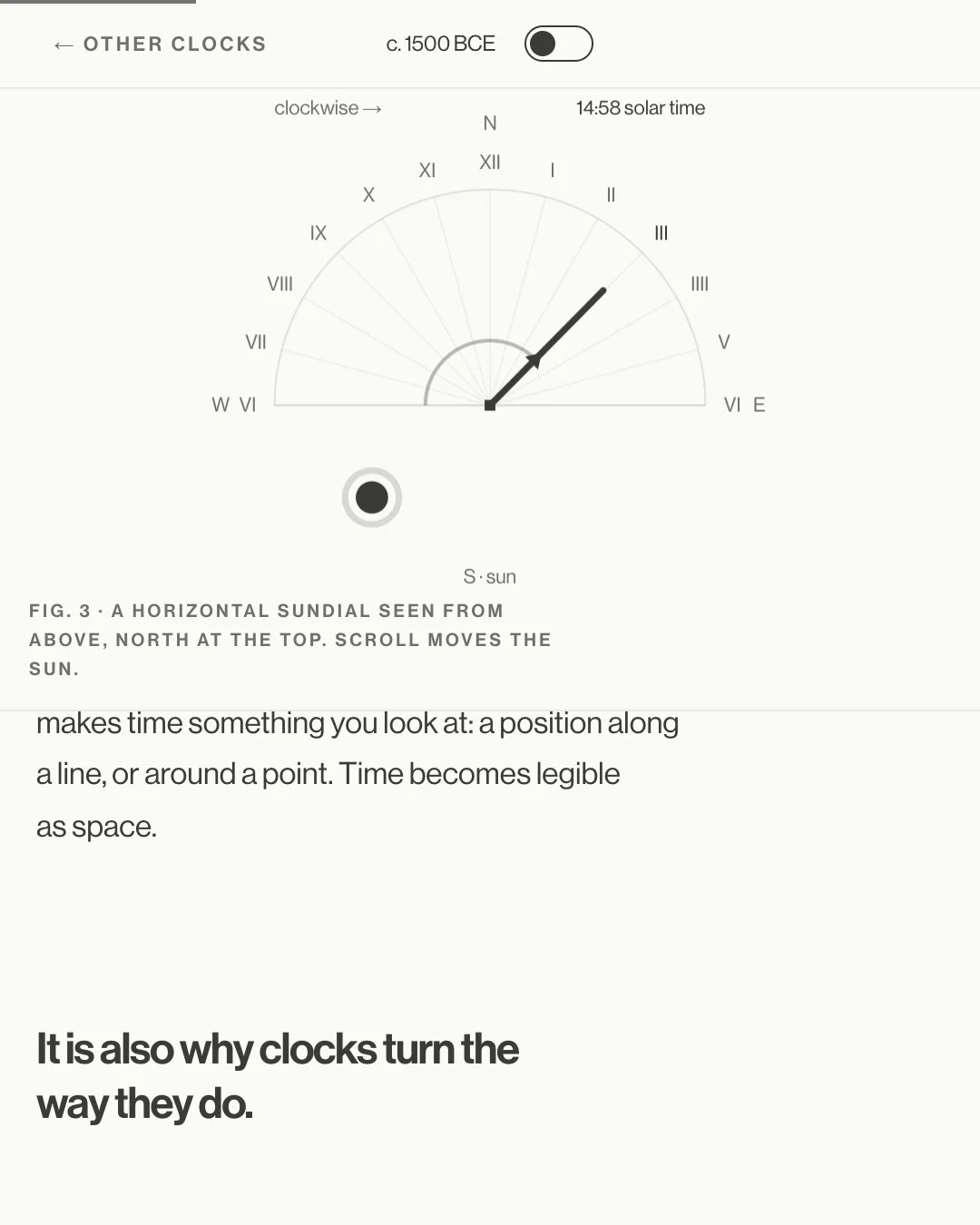
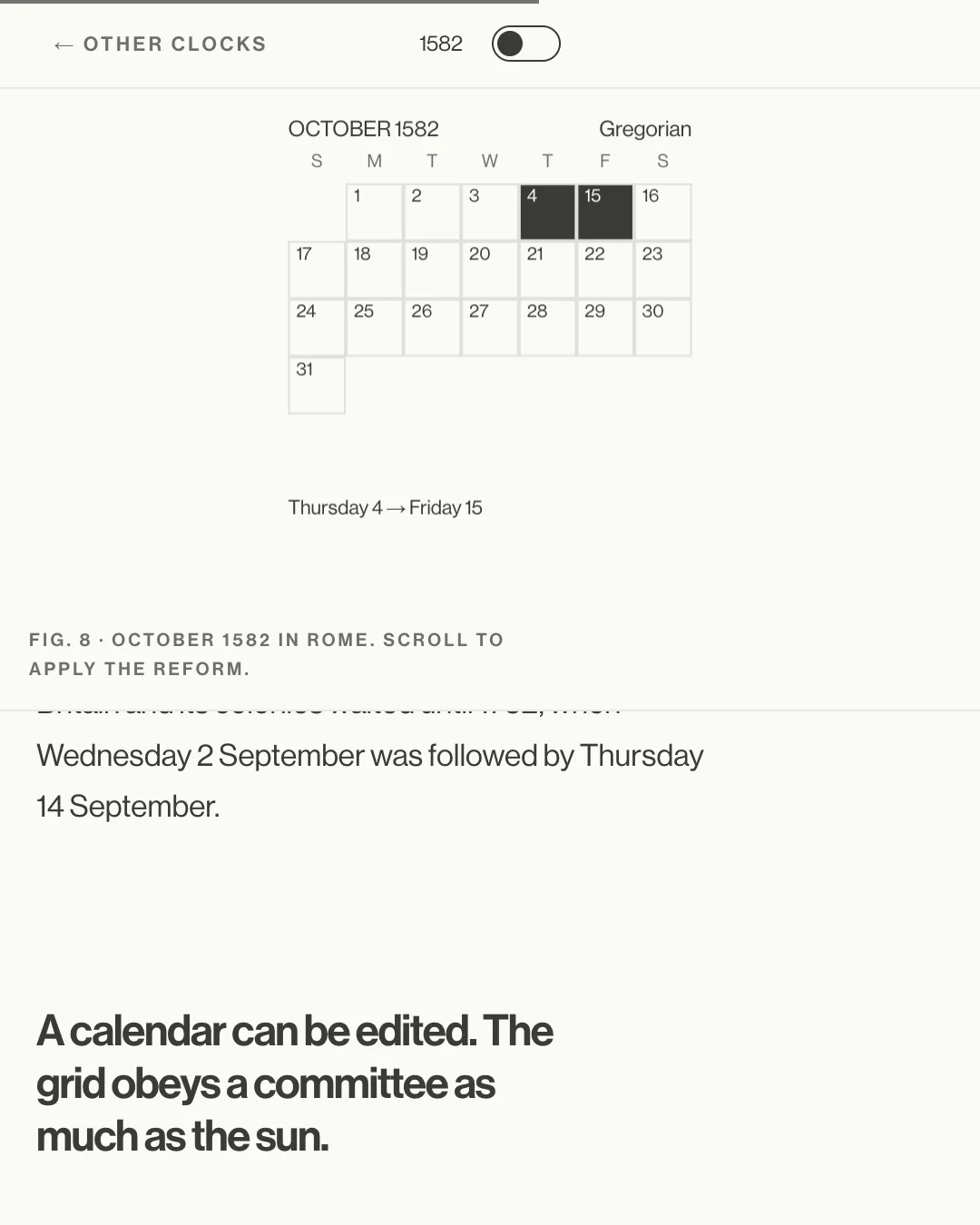
The companion essay, How we learned to draw time, asks where the usual shapes came from. It runs sixteen chapters, from notched Ice Age bones to the atomic second. Each chapter keeps a working instrument beside the text. You scroll a sundial, watch hours stretch with the season, lose ten days from October 1582, and drag a pendulum.
Concept, design and code: Thomas Stange.
Type: Neue Haas Grotesk Display.
Controls: DialKit by Josh Puckett. Smooth scroll: Lenis.
Historical images: Wikimedia Commons, credited in the essay.